
Inspired by David Tudor’s « Rainforest »
Musique : Ollivier Coupille, Thierry Madiot, Boris Allenou
Version Francaise :
Coproduction Lutherie Urbaine/Les Instants Chavirés.
Le département de la Seine-Saint-Denis (France) a soutenu la création de cette œuvre, (octobre 2016).
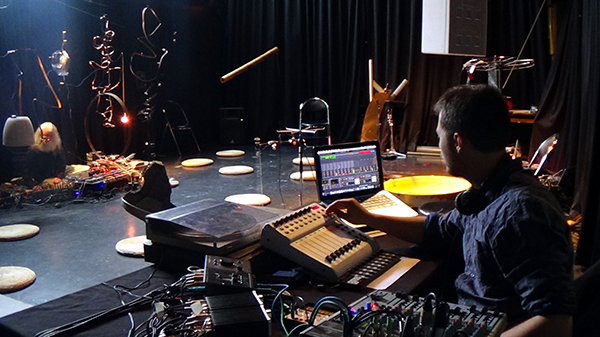
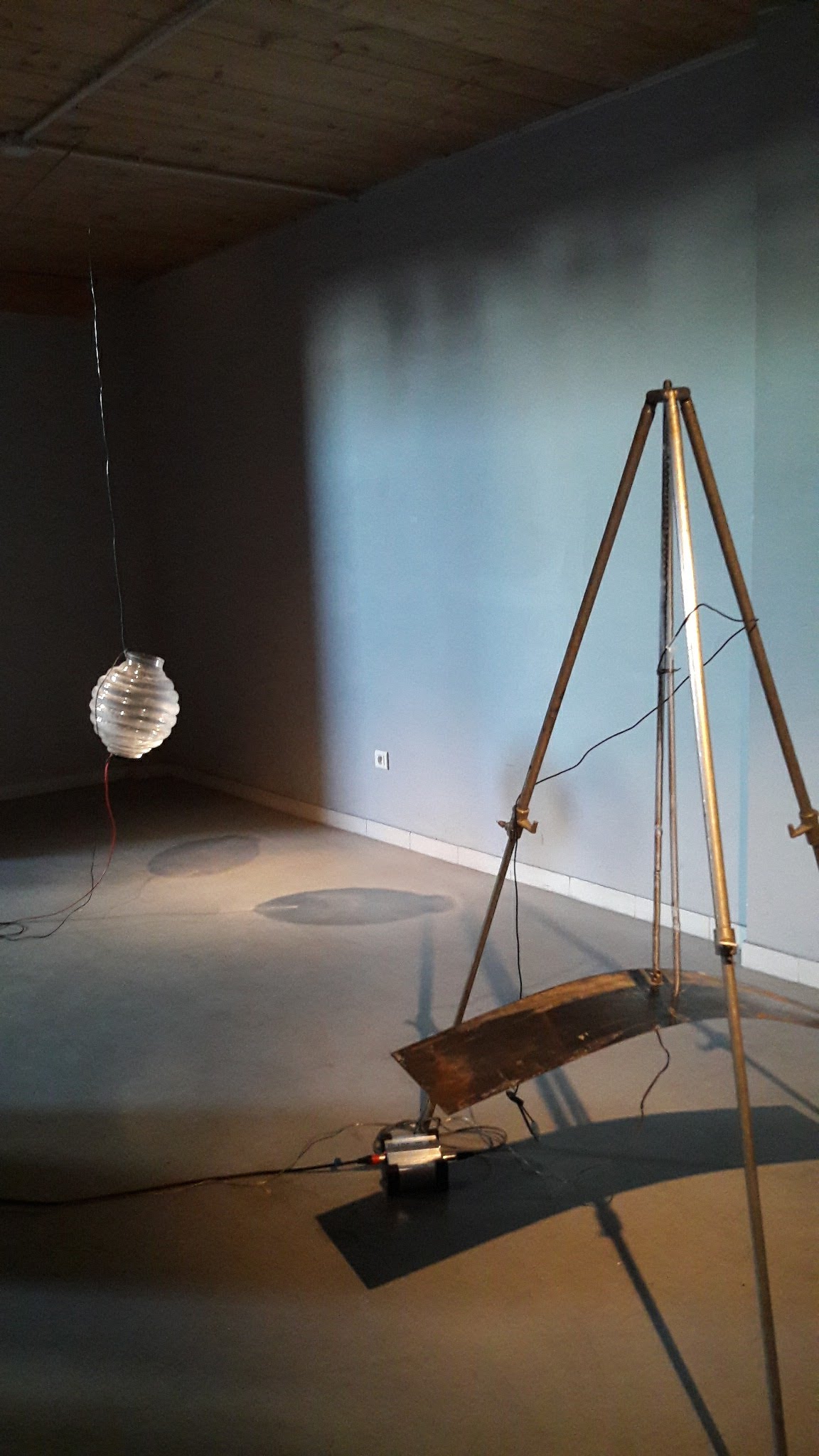
Ollivier Coupille s’est joint à Thierry Madiot et Boris Allenou pour donner un nouvel élan à un projet sonore expérimental de longue date. Pour cela, les trois musiciens ont basé leur exploration sur Rainforest, une création initialement produite pour le chorégraphe Merce Cunningham en 1968 par David Tudor. L’œuvre a été reprise en 1973 (Rainforest Version IV) avec des objets “prêts à l’emploi” (référence à Marcel Duchamp) et une configuration sonore électro-acoustique. Il s’agit en effet d’un processus évolutif de création dynamique qui n’est pas destiné à se stabiliser complètement : sa complexité et sa forme évolutive peuvent être comparées à la création d’un nouvel écosystème.
Cet hommage à Rainforest IV a été créé pendant mon Master en Musicologie. Il m’a beaucoup inspiré et j’ai décidé de concentrer ma thèse sur l’œuvre de David Tudor, l’écologie sonore et le Do It Yourself. Je l’ai intitulé : “L’apport du mouvement Do It Yourself dans la création musicale : l’exemple de Rainforest”. J’ai même eu la chance de donner une conférence lors du colloque international “Musiques électriques, électricité et musique” organisé par l’Université Paris 8. Le titre de cette présentation était : “Rainforest : dispositif électronique, Do It Yourself et décroissance“.
Pour plus d’informations sur Rainforest et sur l’œuvre de David Tudor en général, je recommande vivement le travail de You Nakai.
“… J’ai découvert que ce que je voulais était une forêt – c’est pourquoi je l’ai appelée Rainforest – c’était une forêt à voix unique. Il m’est apparu clair que je devais commencer par les haut-parleurs. “
David Tudor
“Un des processus de raffinement était de collecter les vibrations de l’un de ces objets à l’aide de microphones de contact et de les réinjecter à l’entrée du circuit pour être mélangées puis éventuellement détournées vers un autre objet ou vers un haut-parleur conventionnel. Un phénomène de recyclage s’est alors produit, faisant de Rainforest un système sonore écologiquement équilibré. “
Gordon Mumma
English Version :
Coproduction Lutherie Urbaine/Les Instants Chavirés
The departement of Seine-Saint-Denis (France) supported the creation of this work, (October 2016)
Ollivier Coupille joined Thierry Madiot and Boris Allenou to give new impetus to a long-standing sonic experimental project. For this, the three musicians based their exploration on Rainforest, a creation originally produced for the choreographer Merce Cunningham in 1968 by David Tudor. The work was resumed in 1973 (Rainforest Version IV) with “ready made” (reference to Marcel Duschamps) objects and an electro-acoustic sound type setting. This is indeed an evolutionary process of dynamic creation which is not intended to fully stabilize: its complexity and its evolutionary shape can be compared to the creation of a new Eco-system.
This tribute to Rainforest IV, was created during my Musicology Masters degree. It inspired me a lot and I decided to focus my thesis on David Tudor’s work, sonic ecology and D.I.Y. I called it :”L’apport du mouvement Do It Yourself dans la creation musicale: l’exemple de Rainforest”. I even got the chance to give a talk during the internationnal coloquium “Musiques électriques, électricité et musique” organised by University of Paris 8. The title of this talk was :”Rainforest : dispositif électronique, Do It Yourself et décroissance”
For more informations on Rainforest and on David Tudor’s work in general I higly recommend the work of You Nakai.
“… I discovered that what I wanted was a forest – that’s why I called it Rainforest – it was a single voice forest. It became clear to me that I had to start at the end with the speakers. ”
David Tudor
“One of the process of refinement was to collect the vibrations of one of these objects using contact microphones and reinjected at the entrance of the circuit to be mixed and mixed and then eventually diverted to another object or to a speaker conventional speaker. Then took place a recycling phenomenon that made Rainforest an ecologically balanced sound system. “
Gordon Mumma






 Boris Allenou